


4 min read
User Acceptance Testing: Why you should plan UATs early on
Do you know this situation? Months of development, the budget has been exhausted and the new software is technically perfect. But after the...

Practical. Proven to success. Tailor-made. Learn more about our case studies.
2 min read
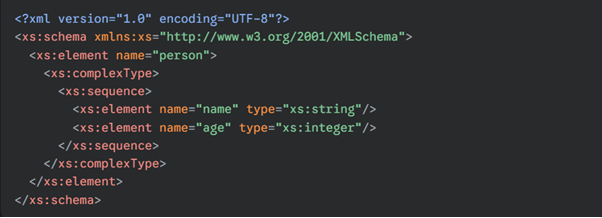
In modern software development, ensuring the quality of data formats is a critical success factor for applications. Schema validation for interfaces plays a key role here, as it ensures that the data structures comply with the defined standards. In this article, we explore the question of what schema validation means and take a closer look at the XSD and OpenAPI formats.
Schema validation is a process in which data structures are checked against a predefined schema. This serves to ensure the integrity and consistency of the data and to detect errors at an early stage. Especially in the case of communication between systems or APIs, it is important that the structure of the data matches in order to avoid compatibility problems.
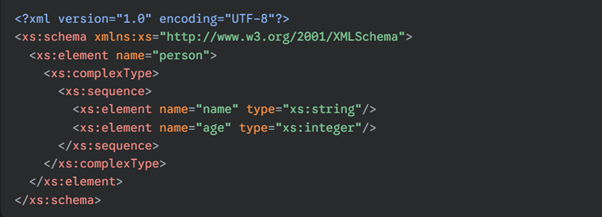
XSD is a standard for defining the structure of XML documents. It allows the definition of elements, attributes, data types and relationships. XSD is often used in the enterprise environment where XML-based data formats are used.
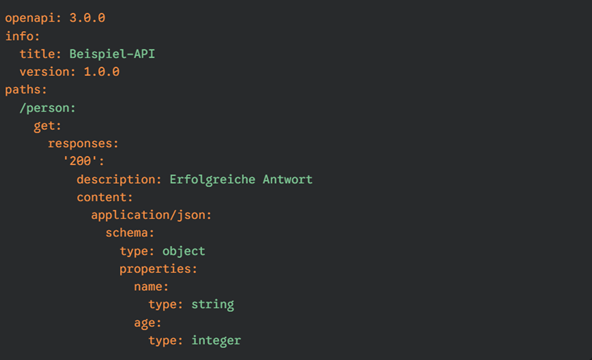
OpenAPI (formerly Swagger) is a standard for defining RESTful APIs. It enables the description of endpoints, request and response formats as well as authentication mechanisms. OpenAPI is often used in web development to standardize communication between client and server.
The process of schema validation can be thought of as a strict bouncer task, where the activity of schema validation is understood to mean that every guest - that is, every data entry - must adhere to the dress code - the corresponding schema. Although the above-mentioned strict bouncer task as a control mechanism is a strict set of rules, problems and difficulties occasionally arise in practice for the following reasons:
It can happen that the rules that define the schema become extensive: Now imagine the situation where the doorman has to make rules not only about the blouse, but also about the number of buttons on the shirt, the length of the sleeves and the material of the trousers for the guests arriving at the disco; this also applies to schemes: the more rules, the more difficult it is to create and check them correctly, and more importantly, the more difficult it is for them to eliminate errors.
Imagine the case where the bouncer suddenly issues new rules without any prior notice; now one is acting the way it used to be, but the other is acting the way it should be - confusing situations arise; this is the case in software development when operating with different versions of a schema: as soon as an older and a more modern schema version are used in a system, error messages and incompatibilities come to light.
Too detailed checking of guests by the bouncer can lead to long queues, and the same can happen in the area of schema validation: Checking large amounts of data in too much detail can lead to a loss of speed in subsequent processing, which in turn can slow down the entire system.
If a guest is not allowed in without being told why, it is quite annoying for them; the same situation occurs when errors are detected in the schema validation without clear, understandable messages being given about the causes of the errors: in this case, it is unlikely that you are making a mistake.
If the doorman only pays attention to the color of the shirt and not the pants, he is not told: errors remain undetected - in software development this manifests itself in the fact that you either only check in the wrong place or do not check carefully enough.
Schema validation is an essential part of quality assurance in software development. By using XSD and OpenAPI, data structures can be standardized and validated to ensure the integrity and compatibility of applications.
We are happy to support you in API quality assurance.
Contact us.


4 min read
Do you know this situation? Months of development, the budget has been exhausted and the new software is technically perfect. But after the...

In today's highly networked digital ecosystems, user expectations are immensely high. A delay of just 500 milliseconds can already significantly...

The complexity of software and IT projects is growing inexorably. Microservices, cloud architectures and networked systems are increasing...